


Prostate Cancer Radiation Therapy: Questions to Ask
A prostate cancer diagnosis can bring a flood of questions: What are the treatment options? What does radiation therapy involve? How do you know which approach is right?
September is Prostate Cancer Awareness Month, making it an important time to talk not only about awareness and early detection, but also about what comes after a diagnosis—understanding your options and knowing what to ask your care team.
For people researching prostate cancer treatment in Kansas City, learning the language of radiation therapy can make those conversations easier. Kansas City Proton Institute (KCPI) provides proton therapy in Overland Park and helps patients understand how this form of radiation may fit into an individualized treatment plan.
Choosing The Right Treatment for Prostate Cancer
Radiation therapy is one of several approaches that may be considered for prostate cancer. Depending on the individual diagnosis, other options may include active surveillance, surgery, hormone therapy, or a combination of treatments. The right approach depends on factors such as the cancer’s stage and risk level, overall health, prior treatment, and the patient’s goals and priorities. Request an appointment with KCPI to explore your options.
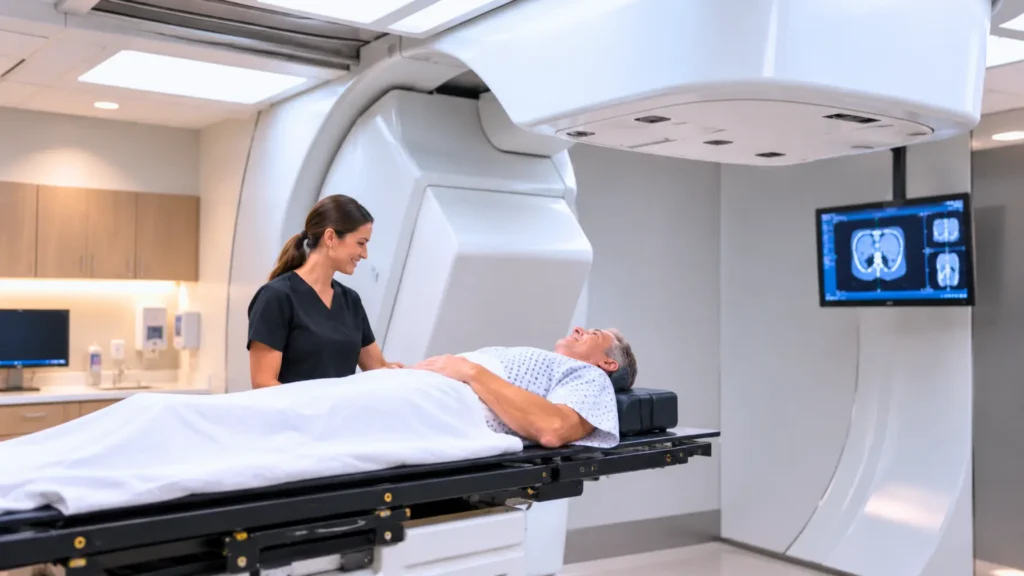
External beam radiation therapy delivers radiation to a specific area of the body from a machine outside the body. Proton therapy is one type of external beam radiation therapy. A radiation oncologist can explain the potential benefits, limitations, side effects, and alternatives that apply to an individual patient.
What Is Proton Beam Therapy for Prostate Cancer?
Proton therapy, also called proton beam therapy, uses positively charged particles called protons rather than the photons used in traditional x-ray radiation. Proton beams can be planned to deliver radiation to a targeted depth and stop, which can reduce radiation exposure beyond the treatment target. Because the prostate sits close to structures such as the bladder and rectum, treatment planning focuses on delivering the prescribed dose to the cancer while limiting unnecessary exposure to surrounding healthy tissue when possible. Explore your treatment options with KCPI!
How Does Proton Therapy Differ From Traditional Radiation?
Both proton therapy and traditional photon (x-ray) therapy are forms of external beam radiation. One key difference is how the radiation dose travels through the body: Photon beams continue beyond the tumor, while proton beams can be planned to stop at a specified depth. This physical characteristic may help reduce dose to some nearby normal tissues.
That does not mean proton therapy is automatically the right choice for every person with prostate cancer. Treatment decisions should be individualized. Your radiation oncologist can help you compare the expected benefits, risks, treatment schedule, and alternatives based on your specific diagnosis. Explore your treatment options with KCPI today.
 What Should I Ask Before Choosing Treatment?
You do not need to arrive at an appointment already knowing every medical term. A consultation with KCPI is an opportunity to ask questions and understand why a treatment is—or is not—being recommended for you.
- Why are you recommending this type of radiation for my prostate cancer?
- How will treatment be planned to protect nearby healthy tissue?
- What side effects should I understand before treatment begins?
- How many treatments might I need, and over what period of time?
- How could treatment affect my work, exercise, travel, or normal daily routine?
- Is proton therapy appropriate for my specific diagnosis?
- Are there other treatment options I should compare?
- What should I know about insurance coverage and treatment costs?
These questions are about more than the technology used for treatment. They help connect a medical recommendation to your health, priorities, and everyday life. Schedule an appointment with KCPI today.
Where Can I Find Proton Therapy in Kansas City?
For patients in the Kansas City metro, access to proton therapy doesn’t require traveling far from home! KCPI is located in Overland Park, KS, and serves patients from communities throughout the Kansas City area and surrounding region. Location can be an important consideration when a radiation treatment plan involves repeated visits. Being able to receive care closer to home may make it easier to coordinate treatment with work, family responsibilities, transportation, and everyday routines. Give KCPI a call to learn more and schedule an appointment.
How Do I Talk to a Radiation Oncologist?
You don’t need to become a radiation expert before your appointment. Instead, focus on becoming an informed participant in your care. Write down your questions ahead of time, consider bringing someone you trust if you would like another set of ears, and ask your physician to explain anything that is unclear.
One of the simplest and most useful questions is: “Why are you recommending this treatment for me?” Understanding the reasoning behind a recommendation can help you have a more productive conversation about benefits, risks, alternatives, and what to expect.
 Have Questions About Proton Therapy for Prostate Cancer?
If you’re researching radiation therapy for prostate cancer in Kansas City and want to better understand whether proton therapy may be an option, KCPI can help you learn more about the treatment process and next steps. Explore KCPI’s Frequently Asked Questions (FAQs) regarding proton beam therapy and the types of cancer best suited for treatment, and give KCPI a call to learn more, or schedule your appointment.
Sources & Additional Resources
National Cancer Institute – Prostate Cancer Treatment (PDQ®), Patient Version
National Cancer Institute – External Beam Radiation Therapy for Cancer
This article is for educational purposes and is not a substitute for individualized medical advice. Treatment recommendations should be discussed with a qualified healthcare professional.